Autonomous Service Journey for technical support
End-to-end automation of customer technical support across all channels
The Autonomous Service Journey for Technical Support (Support Autonomous Journey) orchestrates how customer issues are received, understood, resolved, and measured across email, web, chat, phone, and CRM without relying on manual triage or fragmented tools. It combines Service Advisors, AI Agents, and Analysts to move support from ticket handling to resolution orchestration.
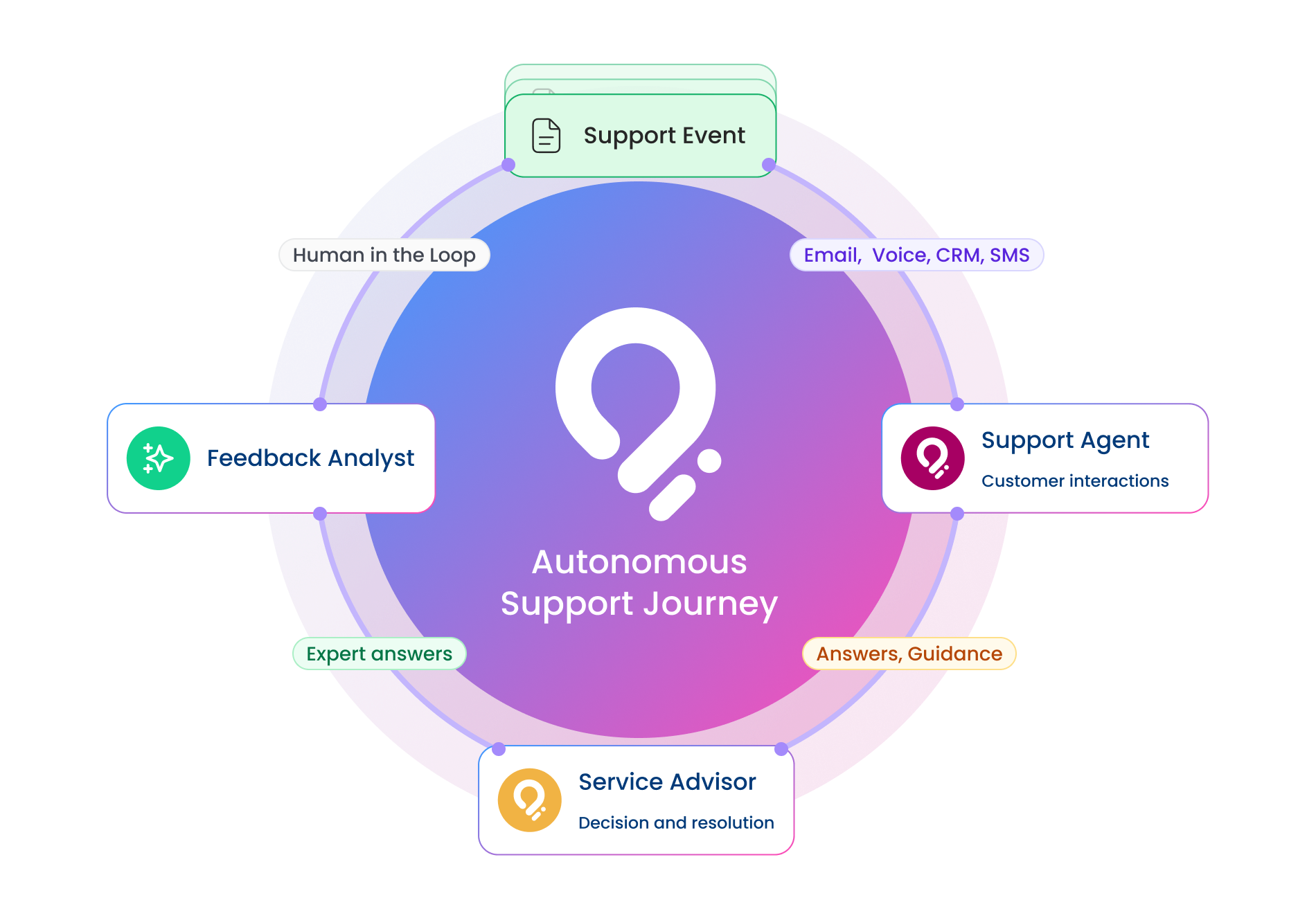
1. Multi-channel intake and secure case creation
Journey stage
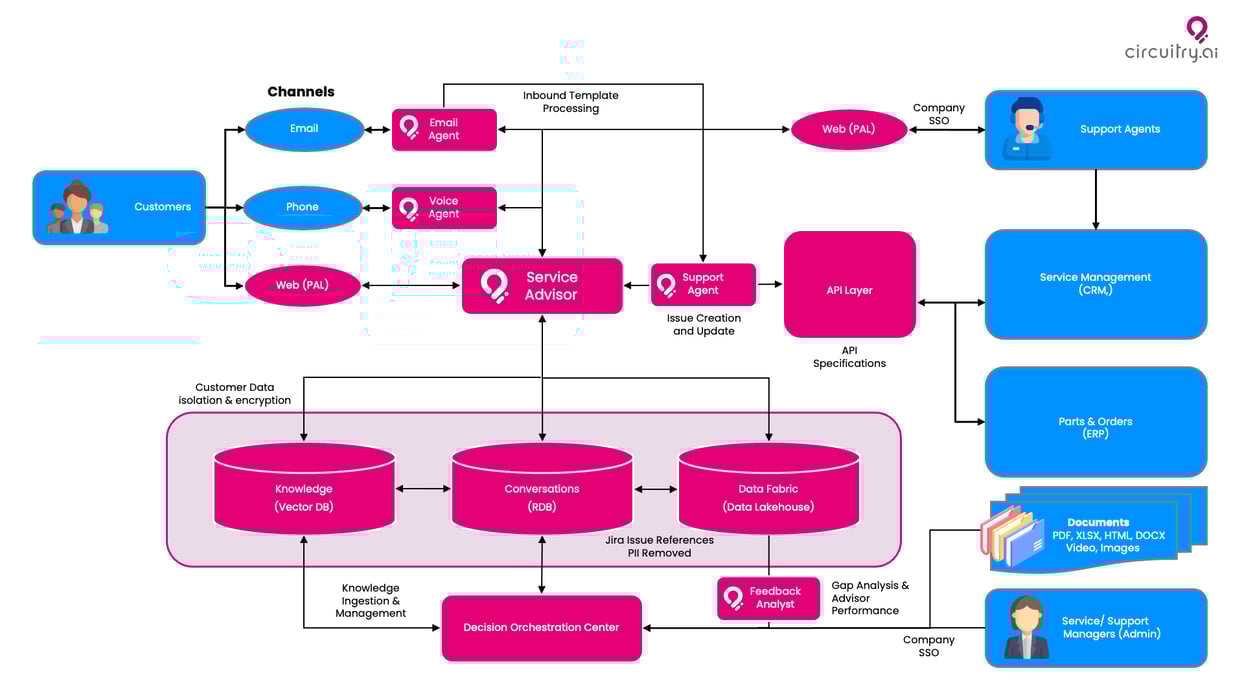
- Customer requests come in through email, web (PAL), phone/voice, or CRM.
- AI-powered email agents and voice agents receive customer requests.
- A support case is created or updated automatically in the CRM.
- SSO, PII masking, encryption, and data isolation are applied at ingestion.
Customer value
- No re-entry of information across channels.
- Faster response times regardless of entry point.
- Enterprise-grade security and privacy by default.
Circuitry.ai differentiation
- Multi-channel interactions with AI agents purpose-built for email, voice, and web.
- Security controls are embedded directly into the journey.

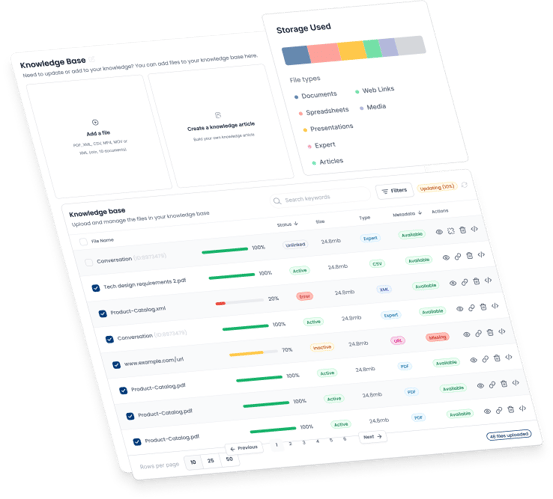
2. Service Advisor: context assembly and knowledge activation
Journey stage
- In addition to the user question, the case context is enriched to provide the most relevant and accurate answers using:
- CRM data
- Product and customer history
- Documents (PDF, DOCX, XLSX, HTML, videos, images)
- Service knowledge and history
- Relevant parts, policies, and service rules are pulled via API and ERP integrations.
Customer value
- Context-aware understanding of the customer’s issue.
- Reduced back-and-forth with support teams.
Circuitry.ai differentiation
- Knowledge is continuously ingested to deliver up-to-date answers.
- Advisors reason over structured systems and unstructured content together.
3. Service Advisor: decision and resolution guidance
Journey Stage
- The Service Advisor evaluates the issue and determines:
- The best resolution path
- Required data or confirmations
- Whether automation, escalation, or human-in-the-loop is needed
- The advisor provides guided responses, next-best actions, or instructions.
Customer value
- Faster resolution with fewer transfers or escalations
- Clear and consistent answers across channels
- Higher first-time fix and resolution rates
Circuitry.ai differentiation
- Advisors recommend the right fix, right part, every time.
- Built to optimize service outcomes (FTFR, resolution time, product uptime).
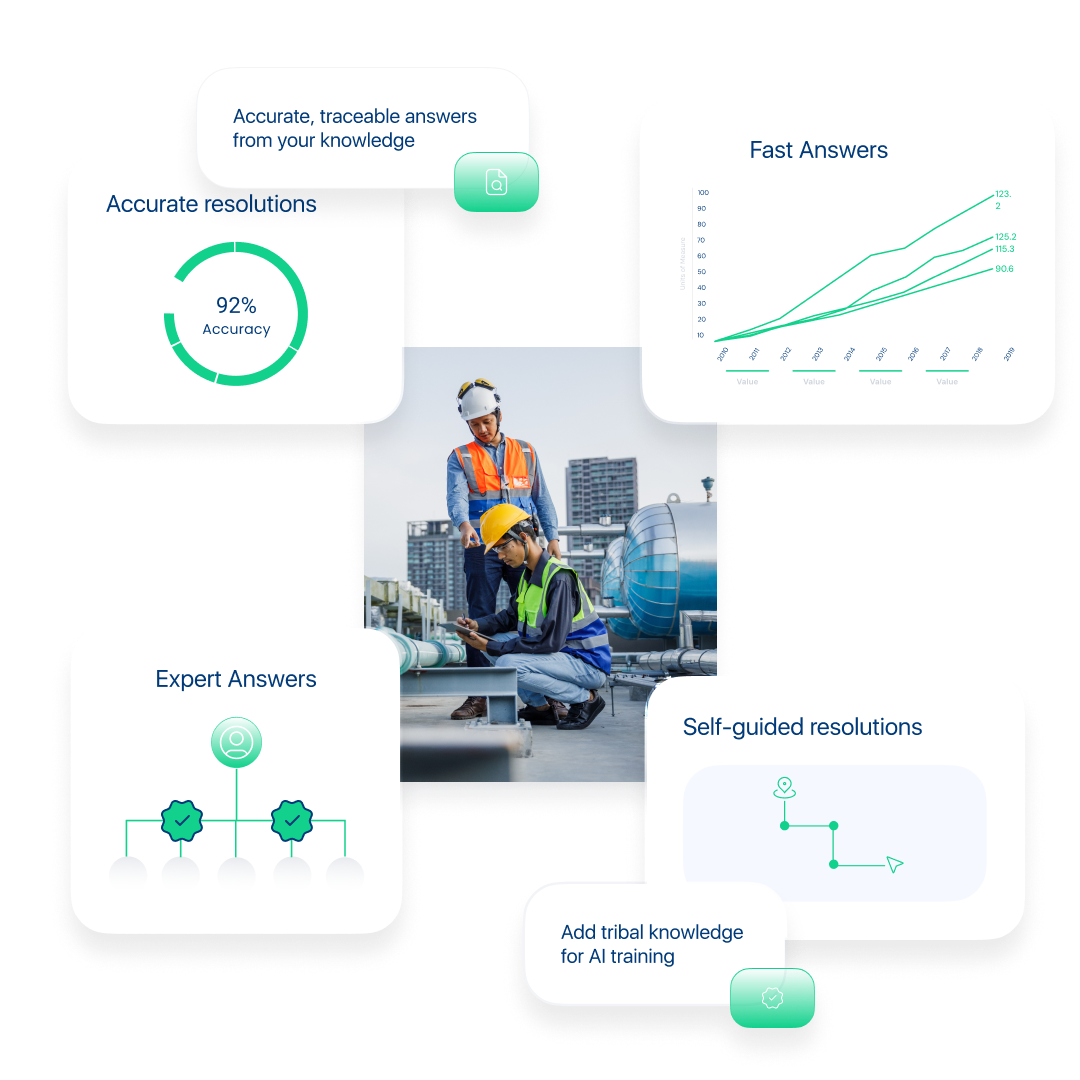
Autonomous Support Journey
.jpeg?width=339&height=600&name=AdobeStock_1683190988%20(1).jpeg "AdobeStock_1683190988 (1)")
4. AI Agents: agent execution across systems
Journey Stage
- Specialized AI Agents execute tasks such as:
- Sending responses via email or web
- Updating CRM cases
- Triggering ERP parts orders
- Calling APIs or validating data
- Agents coordinate with human support agents when required.
Value to customers
- Issues resolved without waiting for manual intervention by human support agents
- Seamless execution across backend systems
- Reduced delays from handoffs or missing steps
Circuitry.ai differentiation
- Agents are orchestrated end-to-end as part of an autonomous service journey.
- Designed to work across CRM, ERP, APIs, and knowledge systems.
5. Human-in-the-loop support
Journey Stage
- Human support agents are engaged only when:
- Exceptions occur
- Policy decisions require approval
- Judgment or customer empathy is required
- Human support agents work with Advisor-guided context, not raw tickets.
Customer value
- Human help when it matters most
- No need to re-explain the issue
- Higher confidence in complex resolutions
Circuitry.ai differentiation
- Humans are part of the journey design
- AI Workers augment human agents instead of replacing them.

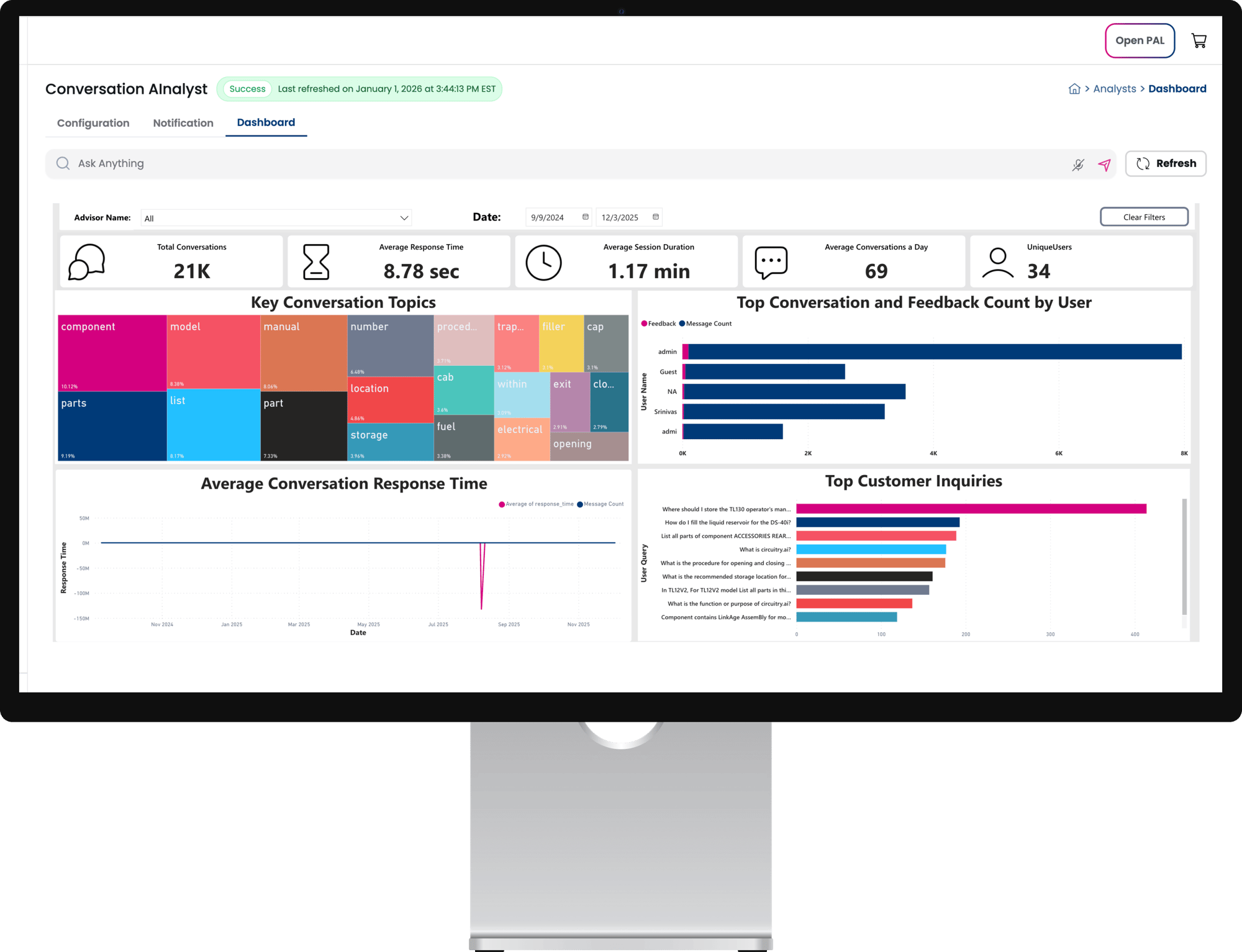
6. AI Analyst: outcome measurement and optimization
Journey Stage
- The AI Analyst captures journey outcomes:
- Resolution success
- Gaps in knowledge
- Advisor performance
- First-contact fix rates
- Case handling time
- Insights are fed back to improve decision flows, knowledge, and automation.
Customer value
- Continuous improvement in support quality
- Fewer repeat issues over time
- Transparent performance metrics
Circuitry.ai differentiation
- Built-in feedback loops tied to outcomes
- Analytics focused on decisions and resolution.
Why Circuitry.ai is different
Traditional Support Automation only includes:
- Channel-specific bots
- Static workflows
- Metrics after the fact
Circuitry.ai Support Autonomous Journey drives service outcomes with:
- AI workers configured through a user-friendly interface
- Service Advisors guide decisions
- AI Agents execute actions across systems
- Analysts measure outcomes and close gaps
With Autonomous Support Journeys, support teams resolve issues faster, more consistently, and at scale, while customers experience seamless, high-quality support across every channel.
How Circuitry.ai powers Autonomous Support Journeys
Circuitry.ai turns customer support into an autonomous, outcome-driven service operation. By combining Service Advisors that guide resolution decisions, AI Agents that execute actions across CRM, ERP, and knowledge systems, and Analysts that continuously measure and optimize results, Circuitry.ai delivers faster resolution, higher first-time fix rates, and lower cost per case—without disrupting your existing platforms. Our volume-based pricing model aligns with the number of support cases processed, allowing organizations to start small, prove ROI quickly, and scale automation predictably as demand grows.
Ready to see how Autonomous Support Journeys can transform your support operations? Schedule a demo with Circuitry.ai to explore real workflows, measurable outcomes, and pricing tailored to your case volume.