Circuitry.aiServices

Service AI, put to work.

Bring AI into the decisions your service teams make every day. Circuitry.ai helps you choose a workflow, prove its value on your data, and put it into production with your people in control.

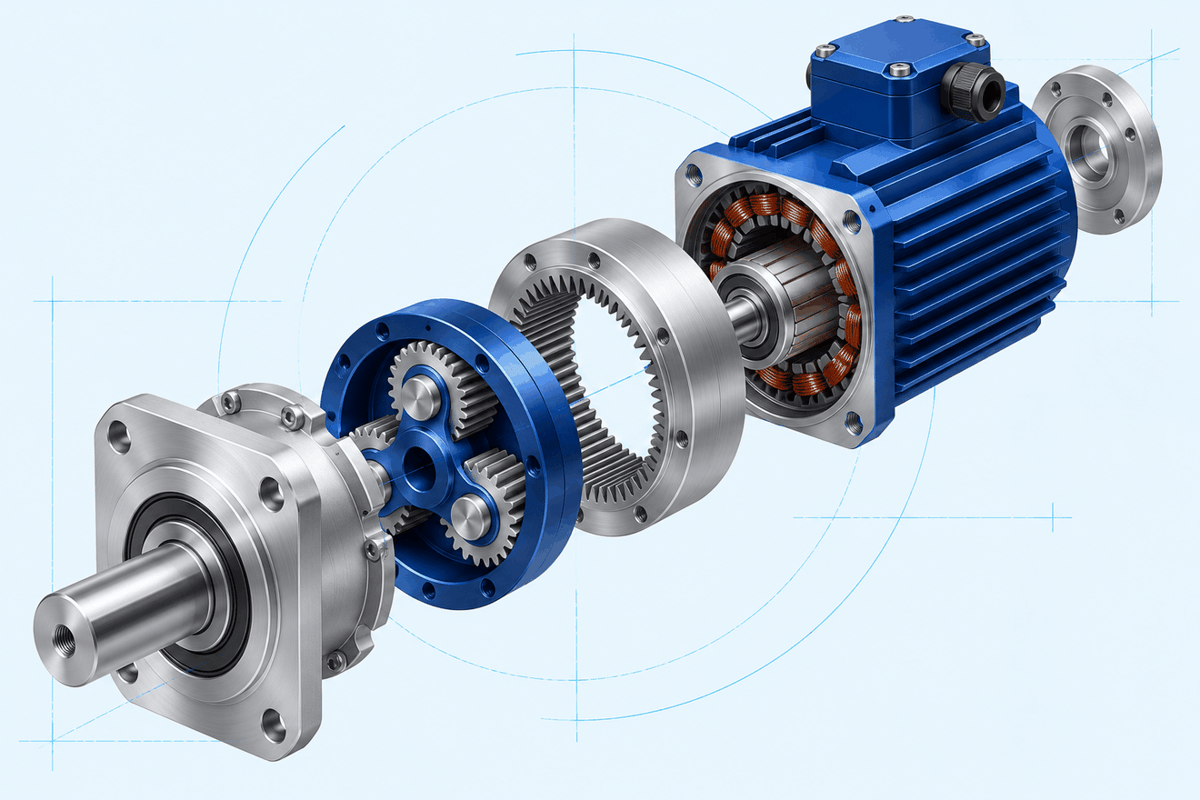
Exploded view of a drive assembly showing the shaft, gears, and motor housing.
Which replacement part fits?
Our services

Where would you like to start?

Choose the engagement that fits the decision in front of you. You can enter at any stage.

free virtual session

Service AI Advisory Lab

Bring a problem such as repeat visits or slow claim reviews. Discuss the use cases, costs, and operational measures that would make an AI investment worthwhile.

You leave with

A starting use case and a business case to develop.

Book an Advisory Lab

free workshop

TRACK Workshop

Map one service journey with the people who own it. Use Target, Review, Assign, Capture, and Kaizen to identify decisions, handoffs, AI Workers, and measures of success.

You leave with

A journey map with a baseline and a first decision to test.

Explore the TRACK workshop

Standard 30-day program

Proof of Value

Test one AI Worker on your own cases, manuals, and policies. Your experts score the decisions and compare handling time and quality with today’s workflow.

You leave with

A scorecard, an ROI estimate, and a decision on whether to scale.

Explore the Proof of Value

90-day target rollout

Customer Onboarding

Connect approved data, configure the worker, and rehearse exceptions. Train the people who will use it, release the agreed scope, and support the first 30 days live.

You leave with

A monitored workflow, trained users, and a support owner.

View the onboarding plan
Service Decision Intelligence

Inside a service decision

Follow the evidence from a service request to an action your team can authorize and measure.

Which replacement part fits this unit?

  1. Request

    Identify the asset

    A dealer supplies the serial number and the part to replace.

  2. Evidence

    Check the build

    The Parts Advisor checks the as-built configuration, parts catalog, and supersession record.

  3. Decision

    Verify the match

    The Advisor recommends a compatible part with its source. An unclear substitution goes to a specialist.

  4. Action

    Prepare the order

    An Agent prepares the line item. The parts team authorizes release under its ordering policy.

Measure Correct-part dispatch and returns caused by fit errors.

What should the technician check next?

  1. Request

    Capture the fault

    A technician records the asset model, fault code, and repair history.

  2. Evidence

    Find the procedure

    The Service Advisor retrieves the service bulletin and manual revision for that equipment.

  3. Decision

    Review the next test

    The Advisor cites the diagnostic step. The technician verifies conditions on the unit.

  4. Action

    Update the work order

    After technician confirmation, an Agent records the finding. Unresolved faults go to technical support.

Measure Diagnostic time, first-time fix rate, and repeat visits.

Does the policy cover this repair?

  1. Request

    Read the repair order

    A dealer submits the failed component, repair lines, and service contract.

  2. Evidence

    Match the policy

    The Warranty Advisor retrieves the contract version, coverage terms, and relevant service history.

  3. Decision

    Assess each line

    Policy rules check eligibility. An Analyst flags unusual costs or missing evidence for the adjuster.

  4. Action

    Route the claim

    An Agent records the recommendation and sends exceptions or amounts above delegated limits to an adjuster.

Measure Expert agreement on coverage and time to adjudicate a claim.

Enterprise deployment

Choose who can act

Set the level of autonomy for each decision. Service and IT owners review the evidence together before extending permissions.

Deployment models, responsibilities, and evidence for expansion
Deployment modelWho makes the decision?Evidence to review
Shadow evaluationStaff follow the current process. Circuit Simulator replays cases and records the AI Worker’s proposed decision.Compare with expert decisions on held-out cases, including rare exceptions and missing records.
Human approvalAn Advisor recommends a next step inside the workflow. A named reviewer approves, edits, or escalates it.Track handling time, acceptance, and overrides by case type. Review why people disagree.
Governed automationAn Agent executes authorized actions within policy and value limits. Exceptions return to a human queue.Monitor incorrect actions, missed escalations, and cost per decision. Rehearse the return to human approval.

What service and IT agree before launch

Knowledge and model selection

Start with the sources one decision needs. Use retrieval-augmented generation to cite the applicable manual or policy, predictive models to score historical patterns, and rules to apply coverage or approval limits. Service experts validate both the outcome and its evidence.

Systems, access, and ownership

Map the asset, policy, and case identifiers your CRM, ERP, field service, or claims system uses. IT approves the interface, tenant boundaries, retention, and read or write permissions. Circuitry.ai configures the AI Worker. Your IT team or preferred systems integrator owns the connection and reconciles failed updates with the system of record.

Acceptance and ongoing review

Agree on a baseline, acceptable error rates, and the cost of a wrong decision. Pilot with named users, record decisions and overrides, and monitor accuracy, latency, and business outcomes after launch. Service and IT owners sign off before expanding to another team or region.

Service AI Advisory Lab

Bring us one service decision.

Where does your team lose time, request a second opinion, or send someone back for another visit? Bring that example to a complimentary Advisory Lab. We’ll work through what AI could change and how you would measure it.

Schedule your Advisory Lab
A service operations team reviews performance data together.
--