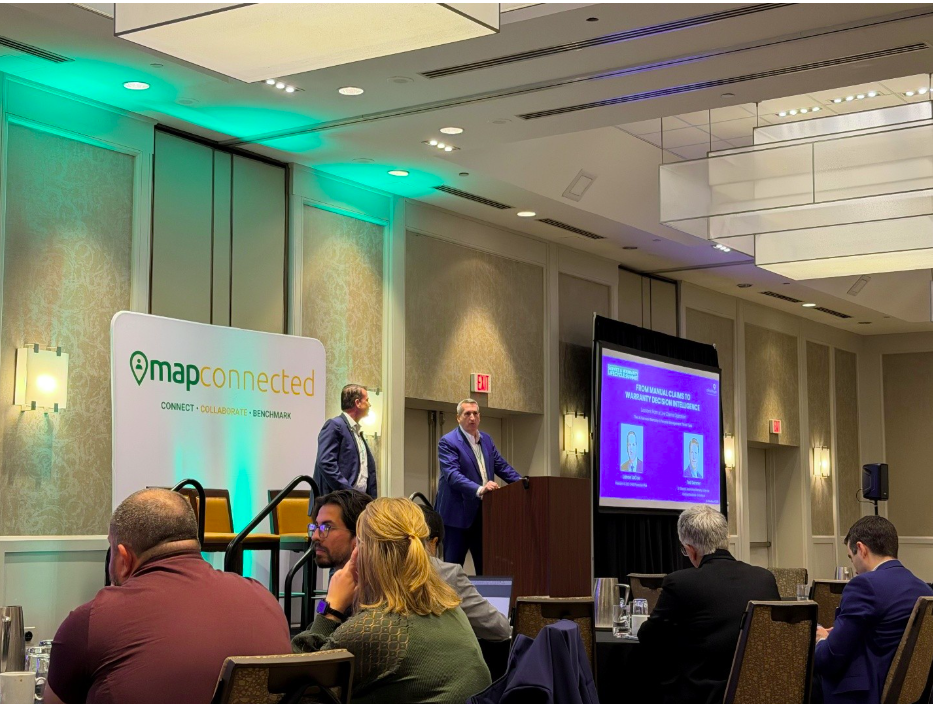
Warranty and service leaders from major automotive, commercial vehicle, and equipment manufacturers gathered in Detroit for the MAPconnected Service & Warranty Lifecycle Summit, held October 19–21, 2026. Participants included General Motors, Ford, Stellantis, Toyota, Hyundai, Kia, Nissan, PACCAR, International, Volvo, Cummins, and Crown. Through presentations, panel discussions, and roundtables, they shared practical approaches to improving warranty operations, product quality, technical assistance centers, and the customer experience. Together, these organizations represent billions of dollars in annual warranty spending, recall programs affecting millions of vehicles, and networks supporting thousands of dealers, underscoring the scale and significance of the issues discussed.
Every warranty claim represents more than a payment decision. It captures a customer’s experience, a repair team’s judgment, and an opportunity to improve product quality. The challenge is turning that information into timely action across organizations that often see only part of the story.
That challenge connected the discussions as industry leaders explored how to improve dealer performance, connect fragmented quality signals, support evolving service networks, and put AI to work in daily operations. Taken together, the discussions pointed to a common operating model: strengthen dealer capability, embed AI in measurable workflows, connect quality signals sooner, preserve accountability across service channels, and govern automation with clear human oversight.
Here are five key takeaways from the conference:
1. Stronger dealer performance starts with capability and clear ownership
James Nardini of Kia America brought attention to an essential role in the warranty ecosystem: the warranty administrator.
Warranty administrators connect four critical activities: repair documentation, policy interpretation, claim submission, and payment. Their expertise directly affects claim quality and dealer cash flow. Nardini proposed strengthening the role through assessed credentials, professional development, recognition, and a meaningful voice in OEM policy and portal changes. He also emphasized that every dealership should retain a named warranty owner, even when administration is outsourced.
His discussion of dealer blind spots added another dimension: familiar metrics can conceal unresolved problems. A closed case may still leave a customer dissatisfied. A completed repair may lead to another visit. Claim activity may hide aging receivables or repeated submission errors.
The proposed response was a broader performance view spanning customer experience, repair quality, and dealer operations—including repeat repairs, vehicle downtime, submission time, and claim acceptance.
For warranty leaders, the implication is practical: technology should strengthen the people accountable for outcomes. AI can help retrieve policy guidance, prepare claims, and flag missing evidence, while experienced administrators resolve exceptions and coach their teams.
Success should show up in better documentation, fewer returned claims, faster payment, and repairs that resolve the customer’s concern.
2. Put AI into the claims workflow and measure its operational value
Lance LaCoe, President and CEO of CARS Protection Plus, joined Circuitry.ai’s Ted Danner to share lessons from applying Warranty Decision Intelligence in a live claims operation.
The starting point was a familiar set of business challenges: manual intake, inconsistent adjudication, difficulty identifying claims that needed closer review, and pressure to support growth with existing staff and systems.
The warranty decision intelligence approach used AI-powered advisors, analysts, and agents to augment or automate manual work across the claims process, from intake to payment. Claim and dealer scoring helped teams focus attention where closer review was needed. Coverage information, repair evidence, and claims history supported those reviews, while automated communications reduced the effort required to coordinate with repair facilities.
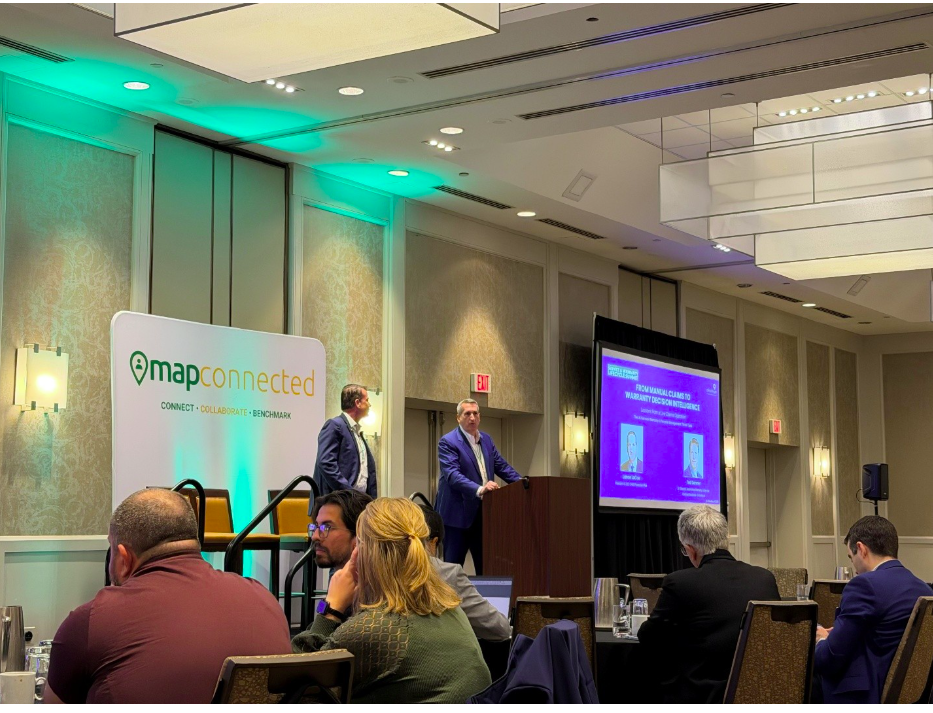
The presentation reported faster resolution and more consistent claim quality, supported by a deployment approach organized around 90 days to value. It also emphasized flexibility and the importance of a close implementation partnership.
The broader lesson is to give AI a defined operational responsibility. A warranty team should be able to identify which work becomes easier, which decisions improve, and how performance will be measured.
Start with a specific bottleneck—collecting missing evidence, evaluating coverage, reviewing unusual parts and labor, or matching an authorized claim to the final repair order. Establish a baseline for turnaround time, review effort, decision quality, and dealer follow-up. Expand automation as performance earns trust.
3. Connect quality signals early enough to change the outcome
Jennifer Jones Wheeler, former Ford Motor Company’s Global Lifetime Warranty Chief, explained why more data does not automatically produce earlier insight.
Manufacturing records, connected-vehicle signals, warranty claims, and customer complaints often use different identifiers. They arrive at different times and are reviewed by different functions. Even essentially equivalent parts can appear under multiple part numbers, splitting an emerging failure pattern into several seemingly insignificant groups.
Tomlin Abraham of General Motors described eight data streams needed to build an authorized, traceable view of a failure over time. They span vehicle build and supplier genealogy, software configuration, telemetry, warranty, and financial information. Connected through a common framework, these records can show the relationships among the vehicle, component, software, symptoms, cost, and responsibility.
Together, these presentations point to a significant opportunity: use warranty information to help prevent the next failure.
That requires more than placing data in one location. Teams need consistent definitions, relationships between records, appropriate access, and shared ownership of emerging issues. AI can help organize narratives, identify related symptoms, and surface patterns for investigation.
The operational test is whether those insights reach someone who can act—and whether the organization learns which corrective actions actually work.
4. Expand service access while preserving accountability for the customer
Bryan Tracy of Slate Auto outlined a warranty ecosystem spanning independent repairers, mobile technicians, connected vehicles, and eligible customer-guided repairs.
These channels can make service more convenient, but each introduces decisions about authorization, technical guidance, evidence, parts validation, and escalation. Tracy’s proposed model paired broader access with safeguards such as repair eligibility tiers, proof of completion, and handoffs to qualified technicians.
Jose Clemente of General Motors illustrated the cost of fragmented accountability through a case involving 34 shop visits and 84 days of vehicle downtime, ultimately resulting in a lost customer. Although individual repairs and supplier responsibilities could each be explained, the combined experience did not deliver an acceptable outcome for the vehicle owner.
His message was that shared execution must preserve clear accountability. Repeated symptoms deserve escalation, and “No Trouble Found” should remain an investigation status rather than become a reason to close the issue.
For OEMs, the implication is that service standards must travel with the work. Wherever a repair occurs, the people involved need access to the right knowledge, applicable coverage, required evidence, and a clear escalation path.
Connected warranty decisions can help coordinate that experience across organizational boundaries. The ultimate measure remains whether the customer’s problem was resolved.
5. Scale AI through disciplined implementation and human judgment
In The Curse of AI Island, James Kiriazes of Bridgestone shared a pragmatic perspective on finding value in AI.
His examples included analyzing images, identifying themes in customer and dealer comments, examining data relationships, and supporting call-center operations. He also described practical challenges: industry terminology, uncommon conditions, extensive testing and validation during initial deployment, integration with existing call systems, and mixed customer reactions.
His evaluation criteria covered data ownership, explainability, auditability, human oversight, model changes, performance monitoring, security, and portability.
The lesson is that production readiness extends well beyond a convincing demonstration. AI must work with real repair language, incomplete documentation, unusual cases, and the systems employees use every day.
Leaders should define what AI may complete, what it may recommend, and what requires human judgment. Those boundaries should be supported by monitoring and reviewed as performance develops.
Adoption matters just as much. Employees need to understand the AI’s responsibilities, recognize when to challenge an output, and have a practical way to provide feedback.
Putting the lessons to work with Warranty Decision Intelligence
At the VIP dinner sponsored by the AI–Service Warranty Lifecycle Management Think Tank, Circuitry.ai Founder and CEO Ashok Kartham shared an Autonomous Claims Journey use case. The example followed a claim from repair-order intake through the steps leading toward payment.
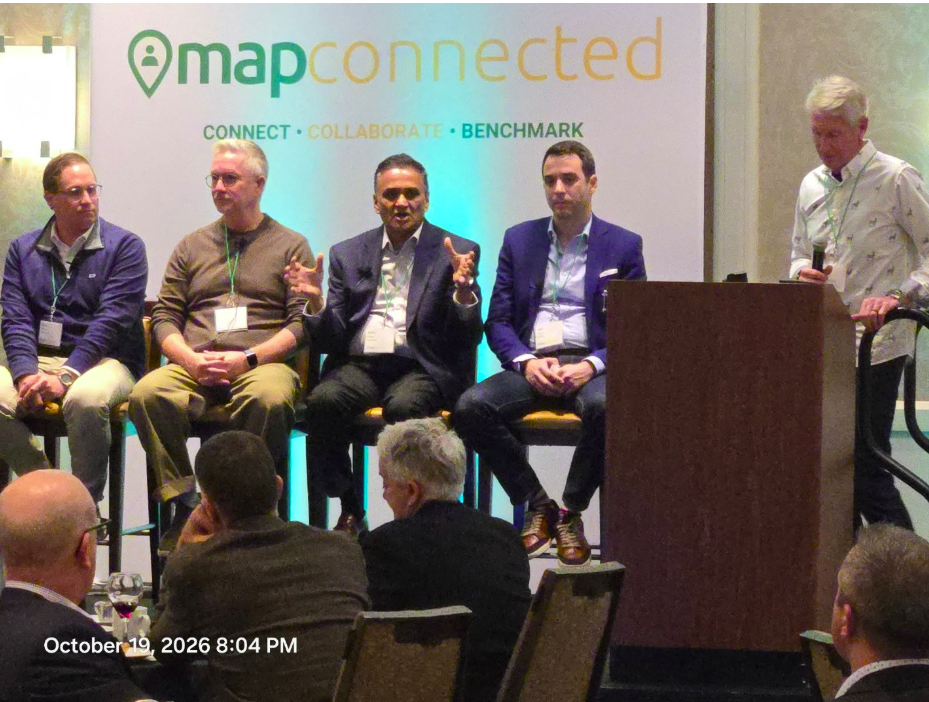
The example showed how AI workers can extract repair information, request missing documentation, evaluate policy and evidence, assess parts and labor, and compare the final repair order with the authorized claim. Exceptions move to an expert with the relevant information organized for review.
Ashok offered a practical way to begin: onboard an AI worker as deliberately as a new employee. Define its job, provide the information it needs, set its authority, assign oversight, and review its performance.
Circuitry.ai’s AI-powered Warranty Decision Intelligence brings this approach to existing warranty and service operations through three types of AI workers:
- Advisors answer: Help employees and dealers understand coverage, policies, and required next steps.
- Analysts evaluate: Assess claims, identify inconsistencies, and surface patterns that warrant investigation.
- Agents act: Collect evidence, coordinate follow-up, and execute authorized steps across systems.
Together, these capabilities connect information to decisions and decisions to action, with human checkpoints where required. Existing claims, returns, recovery, and enterprise systems remain the operational foundation.
Circuitry.ai’s Circuit Simulator can use historical claims to compare decisions, examine differences, and estimate the opportunity for automation and savings before deployment.
These five lessons converge on one practical requirement: warranty organizations need a dependable way to turn fragmented information into governed decisions and coordinated action. The summit also offered a concrete example of what that operating model can look like in practice.
Explore how AI-powered Warranty Decision Intelligence can improve claims, optimize parts returns, strengthen supplier recovery, and turn warranty data into actionable quality insights. Circuitry.ai’s resource hub brings together practical guidance to help OEM warranty leaders identify opportunities across the warranty lifecycle. Explore resources for OEM warranty leaders.
Request a demo of Circuitry.ai to explore how Warranty Decision Intelligence can address a defined claims bottleneck, establish measurable value, and introduce automation with appropriate human oversight.