Service Decision Intelligence: The Path to Autonomous Service Powered by AI Workers
Explore how AI-powered Service Decision Intelligence transforms field service management, enhancing decision-making and driving autonomous service.
Improve technician enablement with AI-driven Decision Intelligence, enhancing efficiency, accuracy, and service outcomes for modern service environments.
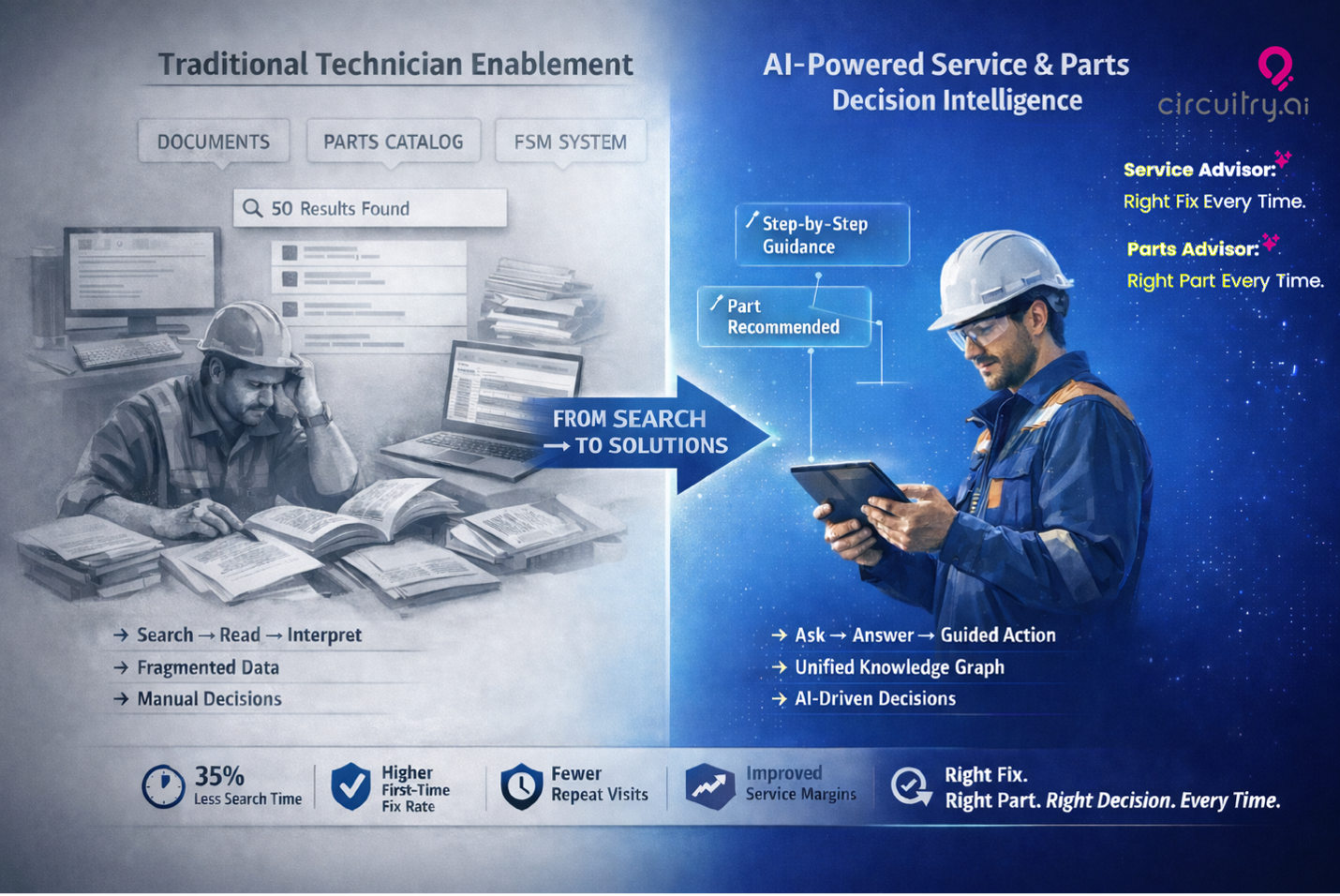
For decades, technician enablement has been built on a simple idea of giving technicians access to information and letting them figure it out. That model is now broken.
As equipment becomes more complex, service environments more fragmented, and experienced technicians harder to find, the old approach of searching manuals, navigating parts catalogs, and relying on tribal knowledge is no longer enough.
We are entering a new era where technicians don’t search; they get answers.
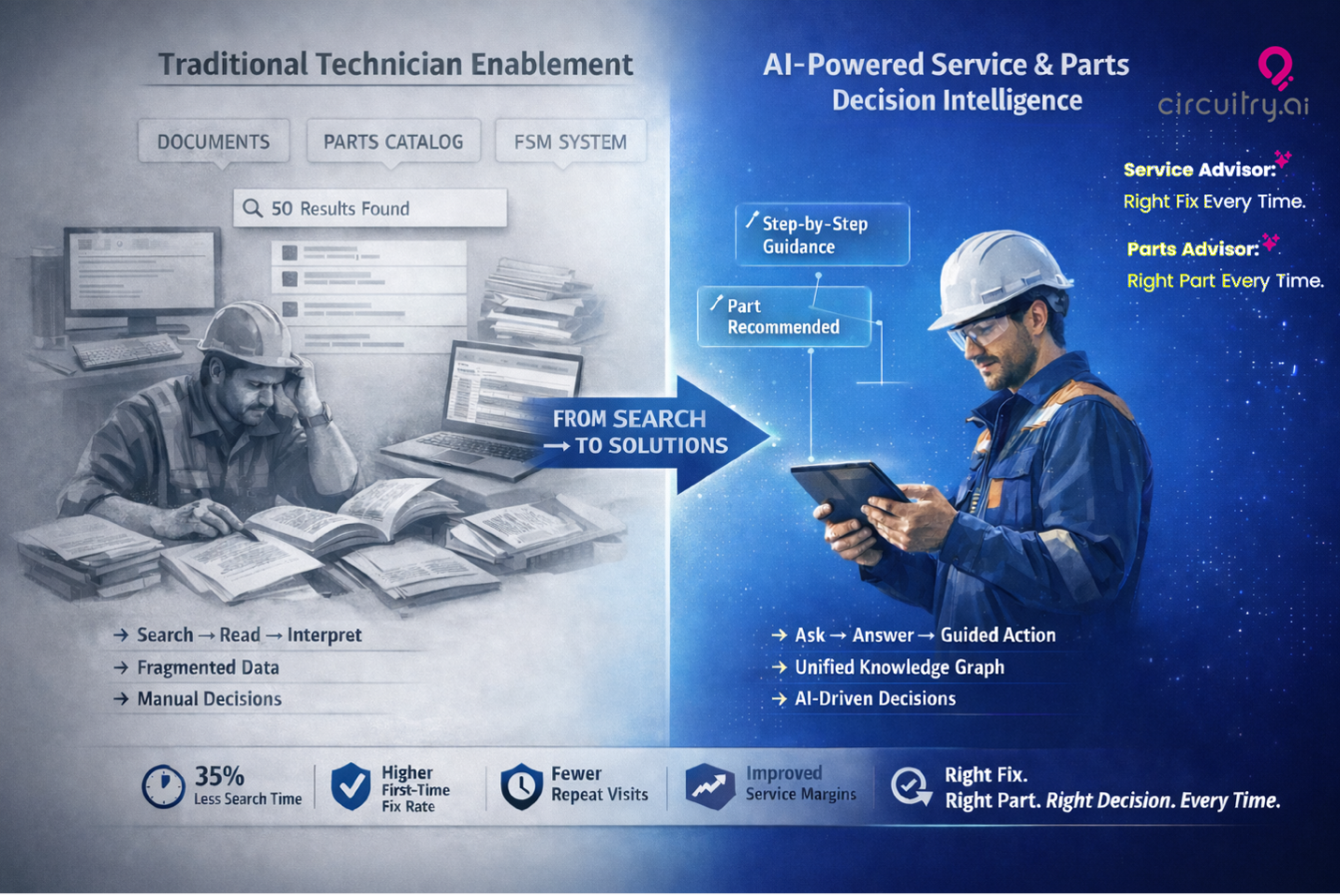
Traditional technician enablement systems were designed around:
These systems assumed that if you can find the information, you can solve the problem.
But reality tells a different story:
Many traditional knowledge and parts catalog vendors have exited or deprioritized this space, leaving customers with aging systems and limited innovation.
Technicians already have access to information. The challenge is getting them to the right decision at the moment of service. AI is changing how technician enablement works.
Old Model:
New Model:
Instead of returning a list of documents, AI systems now deliver:
Another major limitation of legacy systems is data silos. Service manuals live in one system, parts catalogs in another, warranty data somewhere else entirely, and field experience stays locked inside technician notes, rarely surfaced where it's needed most.
AI changes this by combining all sources into a powerful service knowledge graph:
This becomes a connected intelligence across the entire service ecosystem.
The biggest transformation is this: AI has shifted technician enablement from knowledge access to decision delivery.
AI-powered systems now:
This is the emergence of Service Decision Intelligence.
Circuitry.ai’s Service Decision Intelligence platform is designed from the ground up to deliver:
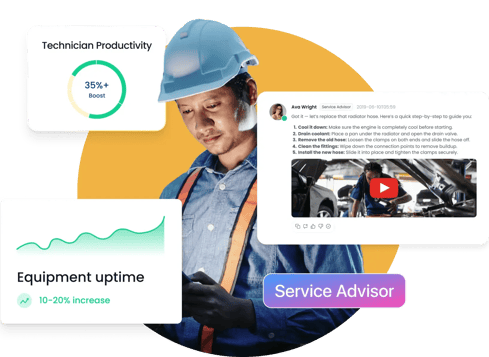
Check out the Service Advisor data sheet to learn more.
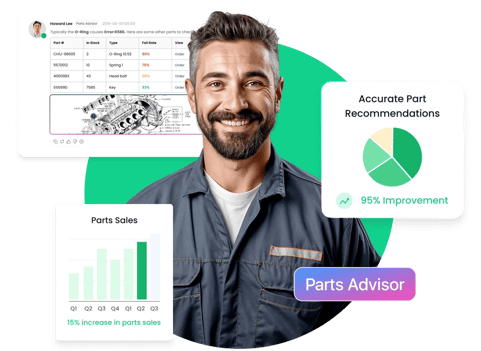
Check out the Parts Advisor data sheet to learn more.
Together, Service and Parts Advisors move technicians from:
One of the biggest barriers to modernization is that companies have already invested heavily in knowledge and parts systems.
That’s why Circuitry.ai is built with AI-ready data pipelines that:
There's no need to rebuild knowledge from scratch or navigate disruptive migrations, which means manufacturers can move to value faster.
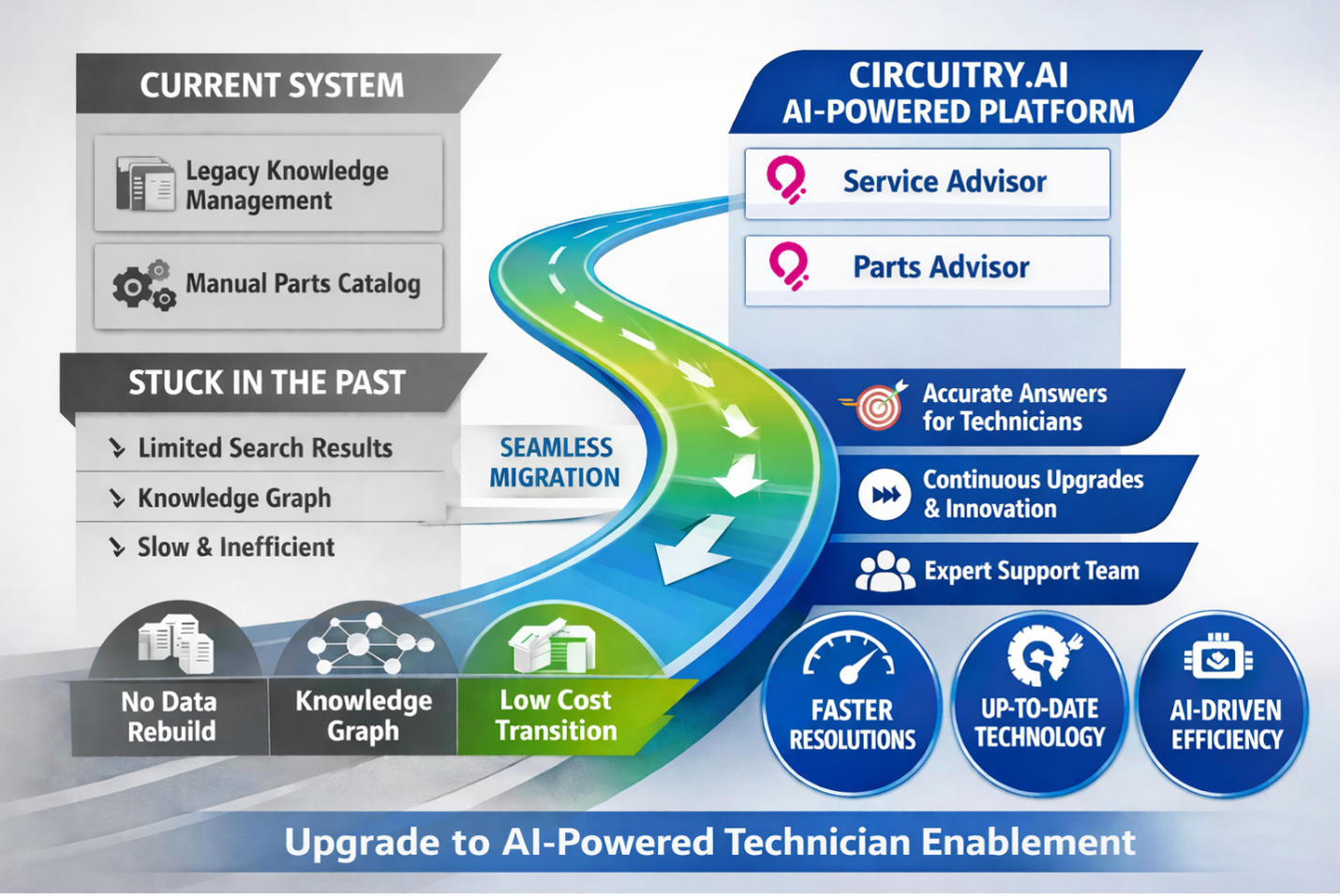
The impact of this transformation is measurable:
Most importantly, every technician, regardless of experience, can perform like your best technician.
The next phase goes beyond guidance to execution:
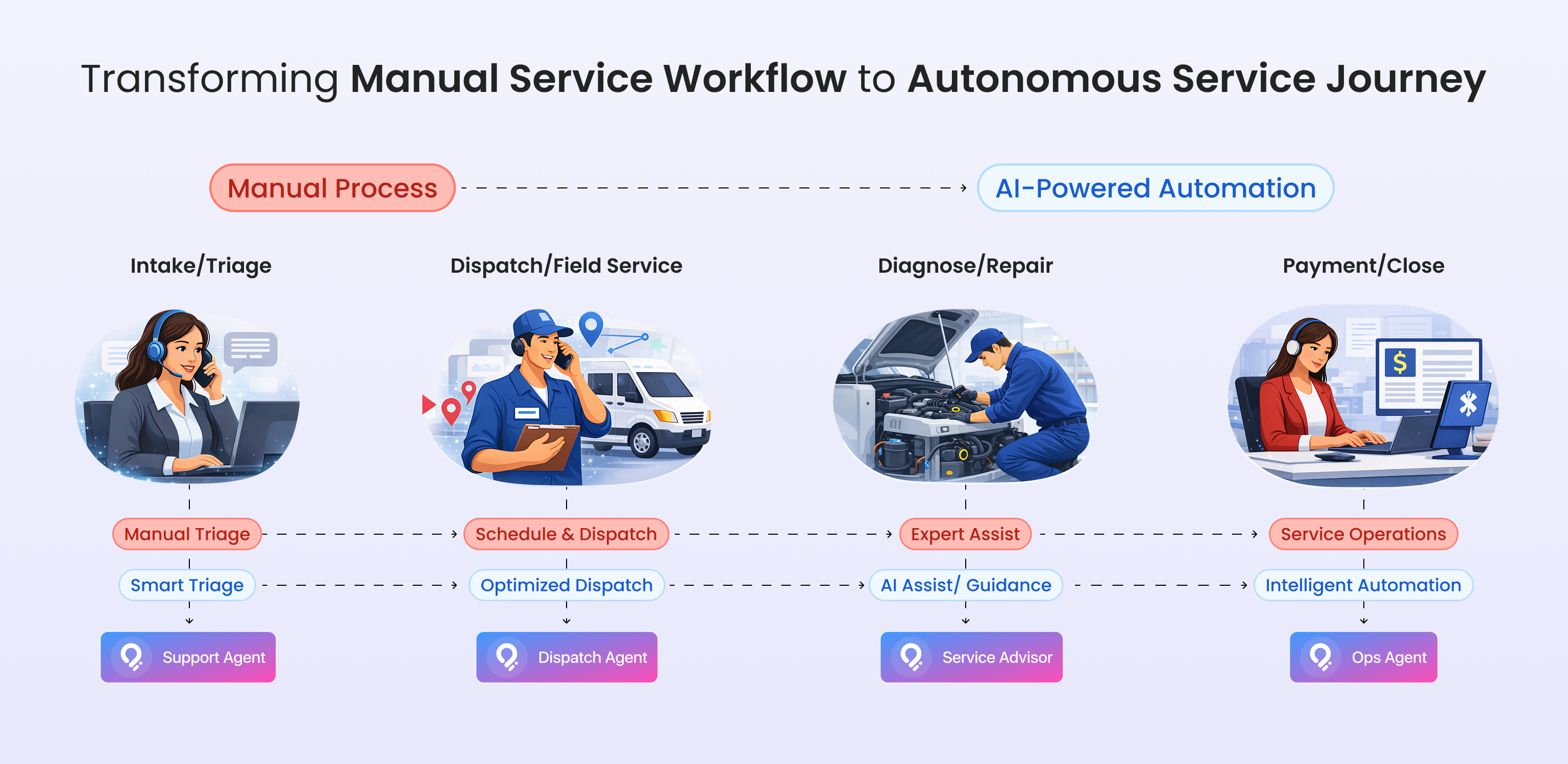
This is the evolution toward Autonomous Service Journeys.
The old world of technician enablement was built on information access. The new world is built on service decision intelligence.
As traditional systems become obsolete and complexity increases, organizations face a choice:
At Circuitry.ai, we believe technicians shouldn’t have to search for answers. They should be guided to the right decision every time.
Schedule a demo now to modernize technician enablement for the AI era.
Explore how AI-powered Service Decision Intelligence transforms field service management, enhancing decision-making and driving autonomous service.
Discover how Service 4.0 transforms reactive service models into autonomous, AI-driven intelligence, turning service into a strategic growth engine.
Discover how Field Decision Intelligence (FDI) revolutionizes service operations by enhancing traditional FSM systems with AI for smarter service...